

"Black Owned" must Come to an End
Why identity led marketing sets you up for failure

Sigh.
This has been collecting dust in my drafts since August 2025 until the 15 Percent Pledge conversation brought it back to life.
—edited with up to date current events
Do you introduce yourself as “Hey, I’m Black?”
Ask yourself, do you walk into a room and lead with your race? Of course not. That would be absurd. So why are we doing it with our brands?
Those are the exact sentiments we should have towards identity-led marketing. Your identity is real but it’s not a business strategy.
THE CASE STUDY — AMI COLÉ & YOUTHFORIA
Back in July 2025, two beauty brands went under.
One was Ami Colé — a Black-owned beauty brand celebrated for its skin-focused, melanin-first vision. The other was Youthforia — an indie brand that couldn’t break through the glass ceiling despite good product and decent buzz until the scandal.
Both folded for the same reason: they weren’t hitting the sales and growth metrics their investors required. And the general beauty industry has shifted and change.

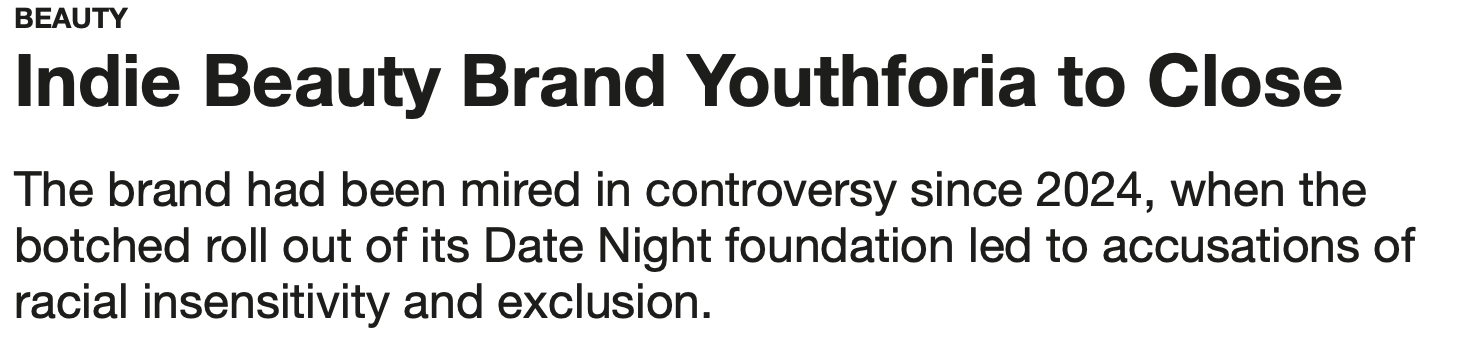
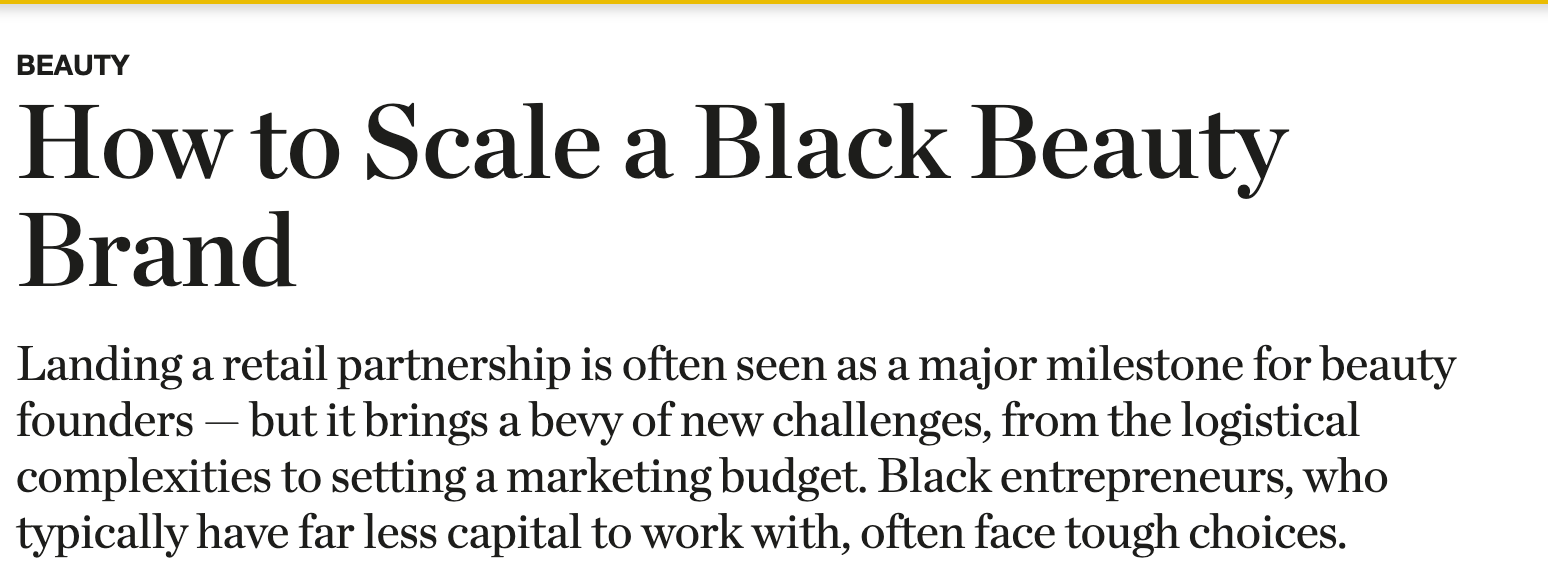
But watch how the narrative split. One story was told economic disparity and lack of support. The other was simply a business failure. That is what identity-led marketing does. It uses black victimhood against you. Which continuously portrays black people as always in need, always “helpless”.
THE MOVEMENT THAT BECAME A BOX
Let’s walk back to 2020.
George Floyd is in the news and suddenly every corporation wants to be Black-adjacent. Some truly cared about social politics — I will give them that, maybe. The rest? Corporate marketing jargon and a lot of commas on spreadsheets. They only cared when they started losing money and needed a few Black names under their belt. It was never genuine care for your brand or your people.
It was a trend. A momentous shift that, unfortunately for them, couldn’t be ignored. But fortunately for Black founders, it was a real opening. So many women and men had a chance to see their dreams come to life. “Support Black-Owned” became the marketing engine, and investors ate it up. Consumers did too.
And here’s what the numbers actually say:
In 2021, Black founders received nearly $1.8 billion in venture funding in the first half of the year alone — a fourfold increase over the prior year. By 2024, that number collapsed to $730 million. Just 0.4% of all venture funding.
Cornell researchers studied the VCs who rushed in after George Floyd and found that most were first-time investors in Black businesses. Therefore, unlikely to invest in more than one Black company, less likely to take a board seat, and primarily motivated by reputation management. They called it “minimum viable signal.”
Tokenism with a term sheet attached.
And this is why “Support Black-Owned” always irked my soul. It sounds like panhandling. That we as a collective need to beg for sales, beg for investments. It reads as:
Should we buy your product because you’re Black?
What value are you actually giving us?
We should invest in your company because you’re impoverished?
Fast forward to 2026 being Black is no longer on trend and the retailers are dropping their DEI pledge! We shouldn’t be surprised or enraged.
Being Black is not a charity. We are not victims. We don’t need to reshape victimhood into a marketing angle.
Let it die.
THE FIFTEEN PERCENT PLEDGE — A CASE STUDY IN DEPENDENCY
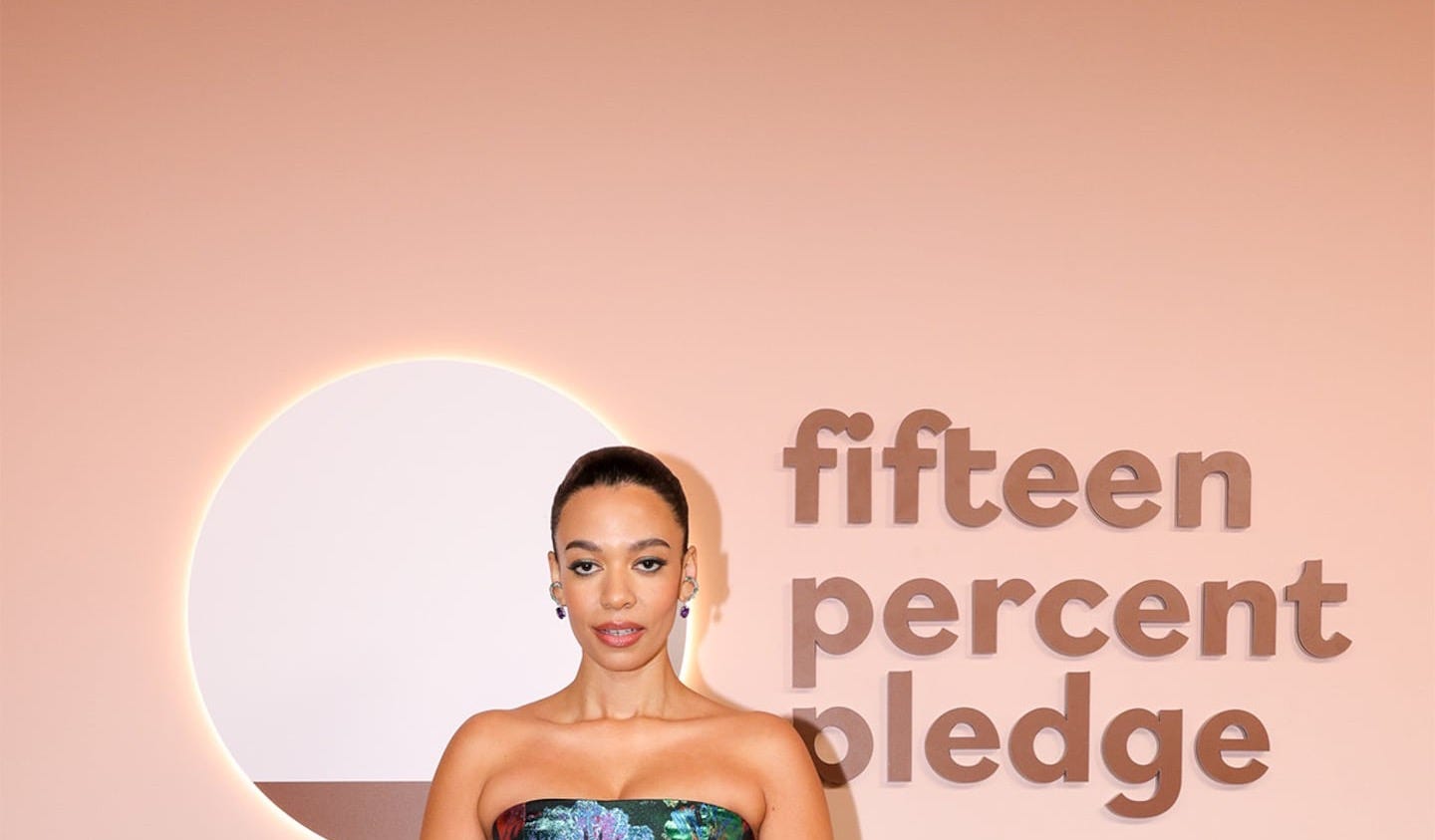
Recently, Slutty Founder wrote a piece about the Fifteen Percent Pledge — essentially arguing that Aurora James profits from Black women’s dreams in beauty while showcasing Beyoncé’s mother as a hard worker. Why are we showcasing Beyonce’s Mom when we have hundreds of founders who are not known and working hard to scale?? I digress.
Read the full piece: Slutty Founder — The Concept of the Fifteen Percent Pledge
Here is what the Fifteen Percent Pledge actually produced: not a single retailer that signed it has declared they’ve met their 15% goal. Only a handful, including Sephora, have even given updates on how many Black-owned brands they currently carry.
And then there’s this. One of the Pledge’s recent initiatives includes what they call an AI training program specifically designed, in their words, to ensure Black founders “aren’t left behind as technology reshapes business.”
Read that again.
They are assuming Black founders need to be taught AI. As if we are incapable of learning on our own. As if the same people building companies, managing supply chains, and navigating investor relationships somehow can’t figure out a technology that a teenager in a dorm room mastered in a weekend. The condescension is wrapped in a grant and a press release, but it is condescension nonetheless.
Source: AfroTech — Fifteen Percent Pledge AI Illumination Grant
The pledge says it redirected $14 billion in revenue. But the structural power still sits entirely with the retailers deciding whose shelf space gets filled and when. Simply put, its dependency with better branding.
The Pledge didn’t give Black founders leverage. It gave retailers a PR strategy with a Black face on it.
It’s a perfect example of why identity-led marketing must die. It is not progressing Black-Owned business. It is fattening pockets off Black women’s dreams.
WHAT’S NEXT
The founders who are actually building generational brands right now are not leading with identity. They are leading with world-building, point of view, and product so undeniable it makes the conversation irrelevant.
Three things to internalize:
Lead with the world, not the identity. Build something people want to live inside. The customer should feel smart for belonging. Not charitable for buying.
Build your own distribution. A pledge, a shelf, a retailer — those are someone else’s house. Your newsletter, your community, your waitlist — that is yours. Nobody can pull your shelf space if the shelf is yours.
Make the product so undeniable the conversation becomes irrelevant. Rihanna did not launch Fenty as a Black brand. She launched it as the brand that finally saw everyone. That is not betraying your identity. That is understanding that the most powerful thing you can do as a Black founder is build something that doesn’t need a badge to justify its existence.
Now conservatism is back, they say. Babes, it never left the table. Thin was always in. Black-owned was never meant to stay. It was always an illusion of inclusivity. The internet is not real life. Marketing is not real life — it is a blurry reflection, distorted just enough to feed you delusions, but never truly a 1:1 truth.
Leading with identity only sets you up to be pigeonholed into a narrative they put in place. As a community, we must end identity-led marketing. You are a founder in your space first. Not a Black founder. Not a Brown founder. Not a woman of color. You are you.
I always say lead with the audacity of a white man. They walk into boardrooms with just an idea and get funded. Meanwhile you already have a profitable business. Lead with the mindset that you are already in the room, not the myth that you are unworthy of getting in.
Lastly, take away the Black Owned from your marketing decks, pitch decks, IG bios. Don’t pigeonhole yourself. You are more than that.
Stay Smart. Stay Chic. Stay PrettyRich.
— Lorainda W.
I really like this, and as someone who works in PR, I have seen many a deck leading with “black-owned” and how to get white retailers to understand why you’re black-owned. If the product is great, you don’t need to refer to your blackness to sell it. Marketing/PR should be based on the effectiveness of the product and USP, and then translate that to your target audience. Very great read 👏🏾👏🏾
This is a really interesting perspective. My father used to say something similar, “You don’t have to be a Black engineer or a Black dentist. You can simply be an engineer or a dentist. Philosophically, I agree with that. But I also think there’s another layer to this conversation that often gets overlooked: access.
A lot of venture capital still flows through social and financial networks that have been accumulating relationships and wealth for generations. Founders like Emily Weiss didn’t just walk into a room with an idea. They were already operating inside ecosystems where capital, introductions, and trust were circulating.
So while I agree that we shouldn’t mentally pigeonhole ourselves, I’m not sure removing identity language alone changes the deeper structural dynamics around who has proximity to capital and who doesn’t. Confidence absolutely matters. But so do networks, history, and inherited access.